Pareidolia
4-channel audio
Pareidolia is a cognitive phenomenon in which the brain finds familiar patterns in ambiguous or formless visual and auditory stimuli, and mistakes them for something they are not. Typical examples include seeing the shape of a face, with eyes, nose, and mouth, in unrelated forms, or feeling as if you hear a human voice or a particular note within random noise. It is plainly an error of the brain, yet there must be a reason why humans keep looking for meaning in meaninglessness, and for something known in what cannot be known.
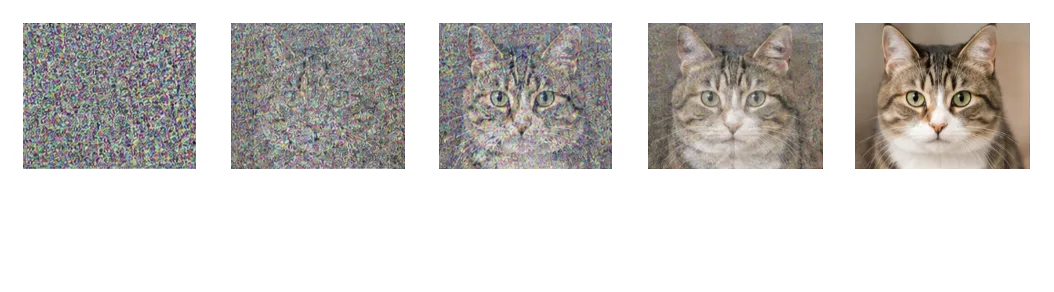
Diffusion models, a technology behind generative AI that draws pictures and makes music, also work by generating random noise, then finding what is wanted within it, clearing the rest away, and little by little building patterns that can be recognized. In a sense, one could say they create on a principle similar to pareidolia. In that respect, noise has once again become a very important concept in our time.
At a glance, unlike AI, I seem to be drawing something new on a blank page. But perhaps what I actually do is find and sift out fragments of something faintly glimmering within countless noises of thought that I cannot even perceive. One day, perhaps I needed more noise. I had been shutting the door and covering my ears to hear and write only what I needed and wanted, and then, at some point, I stepped outside. Once I switched off all the music and notifications that had been firing into my ears, the world was already full of infinite sound. When I listened closely, meaning and familiarity settled even over sounds that had no rules.
Melodies spun by birds who have never seen a score. The precise rhythms of insects who have never learned to keep time. The wind, by contrast, which may blow at any moment, utterly unpredictable. The sound of waves, never once the same. The single tone of a machine running ceaselessly in one place. Horns, ship whistles, and engines announcing departures that carry countless people somewhere. The talk of the marketplace, hard to make out. The laughter of children playing as loudly as they please, with no thought for appearances. At certain moments, all of them seemed to be playing some note for me.
And so I gathered the sounds I collected while wandering through Incheon, the familiar ground where I was born and raised, together with the imagination they sparked, and they became a single pattern. I found the notes and rhythms within the countless sounds I recorded, cut them apart, and joined the small fragments together to play them. So this is music made by the noises of Incheon. Or else, noises I mistook for music. I imagine the first beings who found some pattern in the rhythm of striking stones, repeated day after day with nothing special about it, or in the pitch of a voice calling to prey, and discovered that it was pleasing to hear. If that is how music was born, then even now there was no reason not to find music in everything.
Is this pareidolia merely a fractured mishearing, or does it hint at something about the mystery of creation? Where does music come from? Countless noises are waiting for you now, as you leave this sealed gallery. What meaning can you find in them?